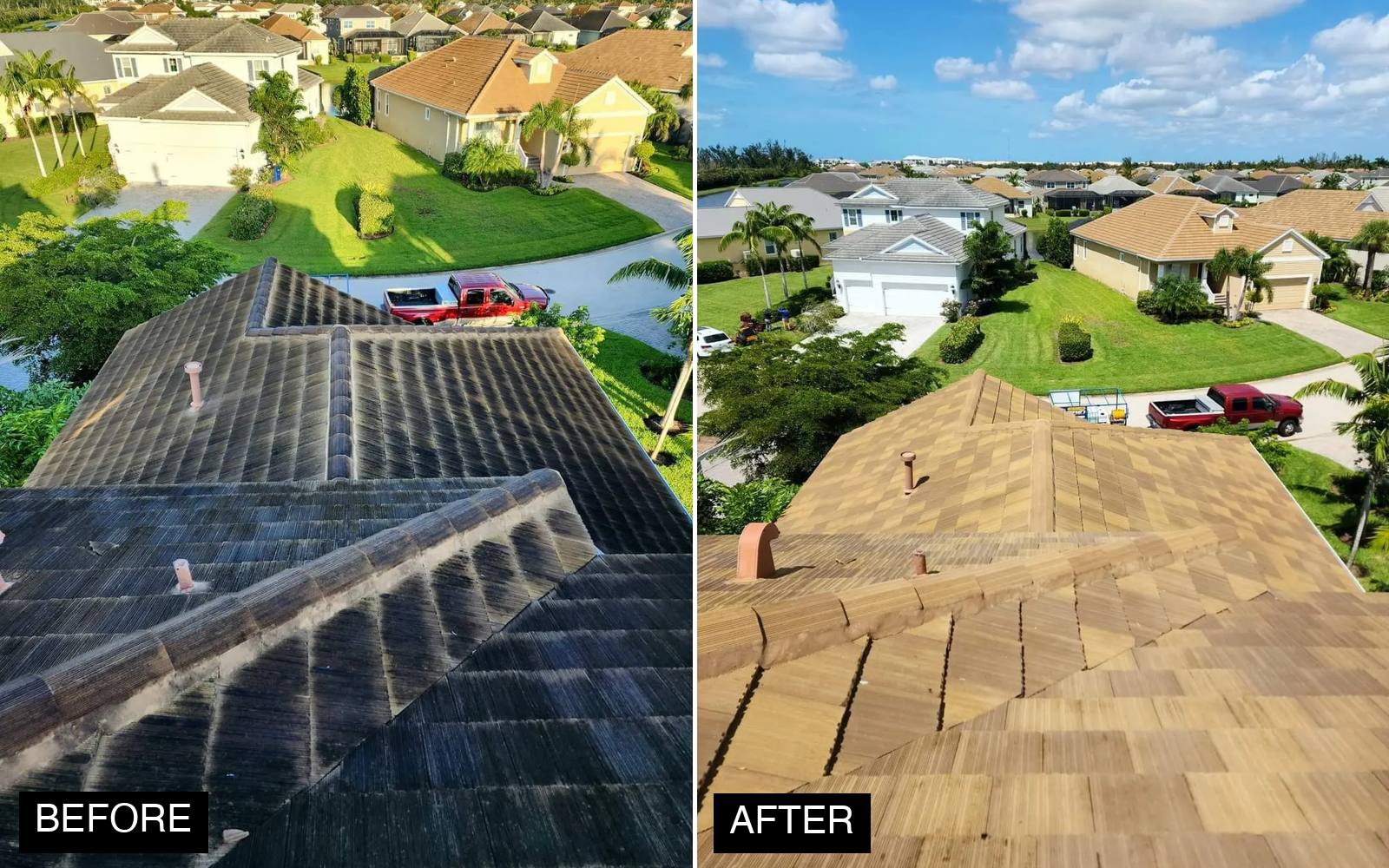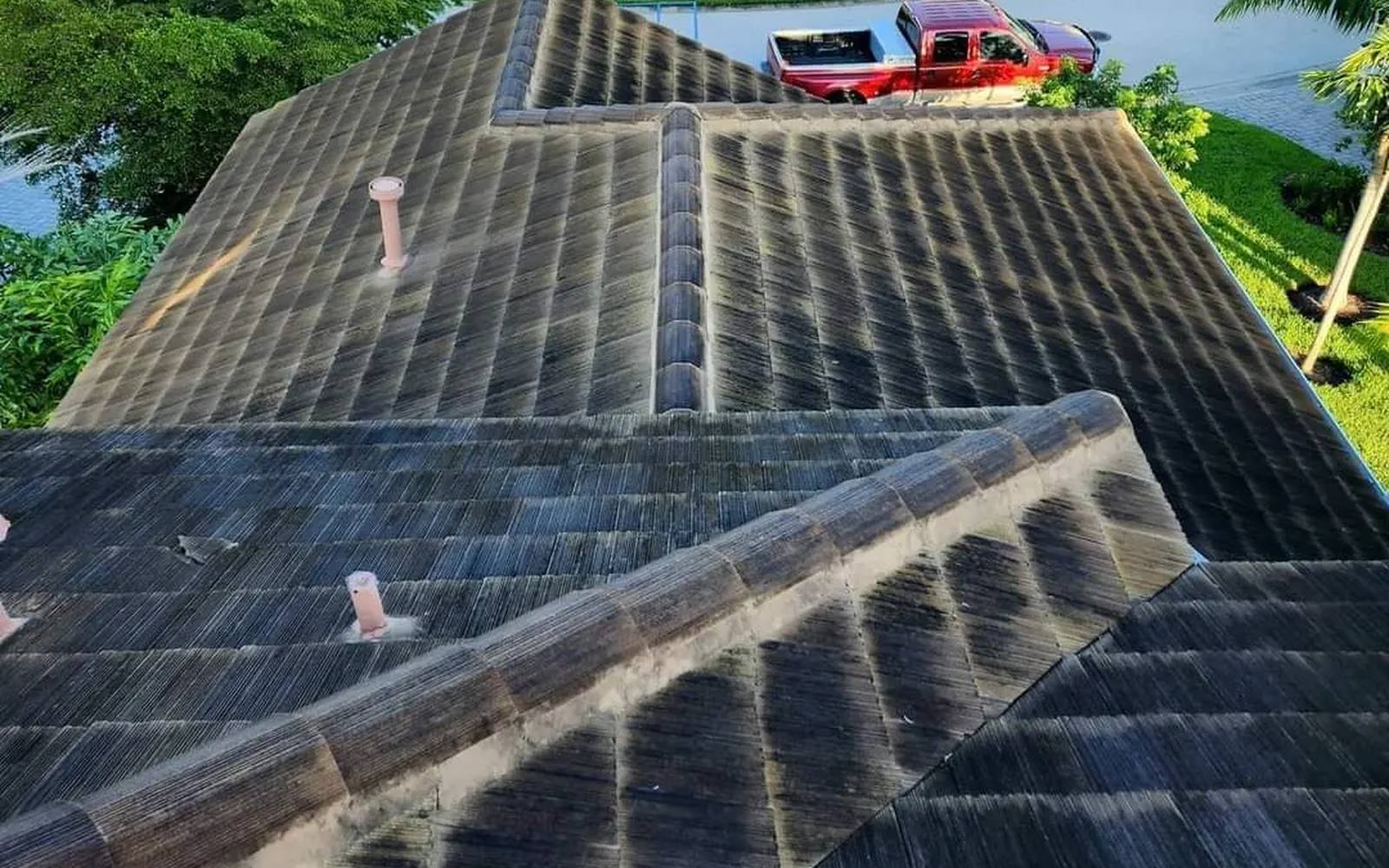
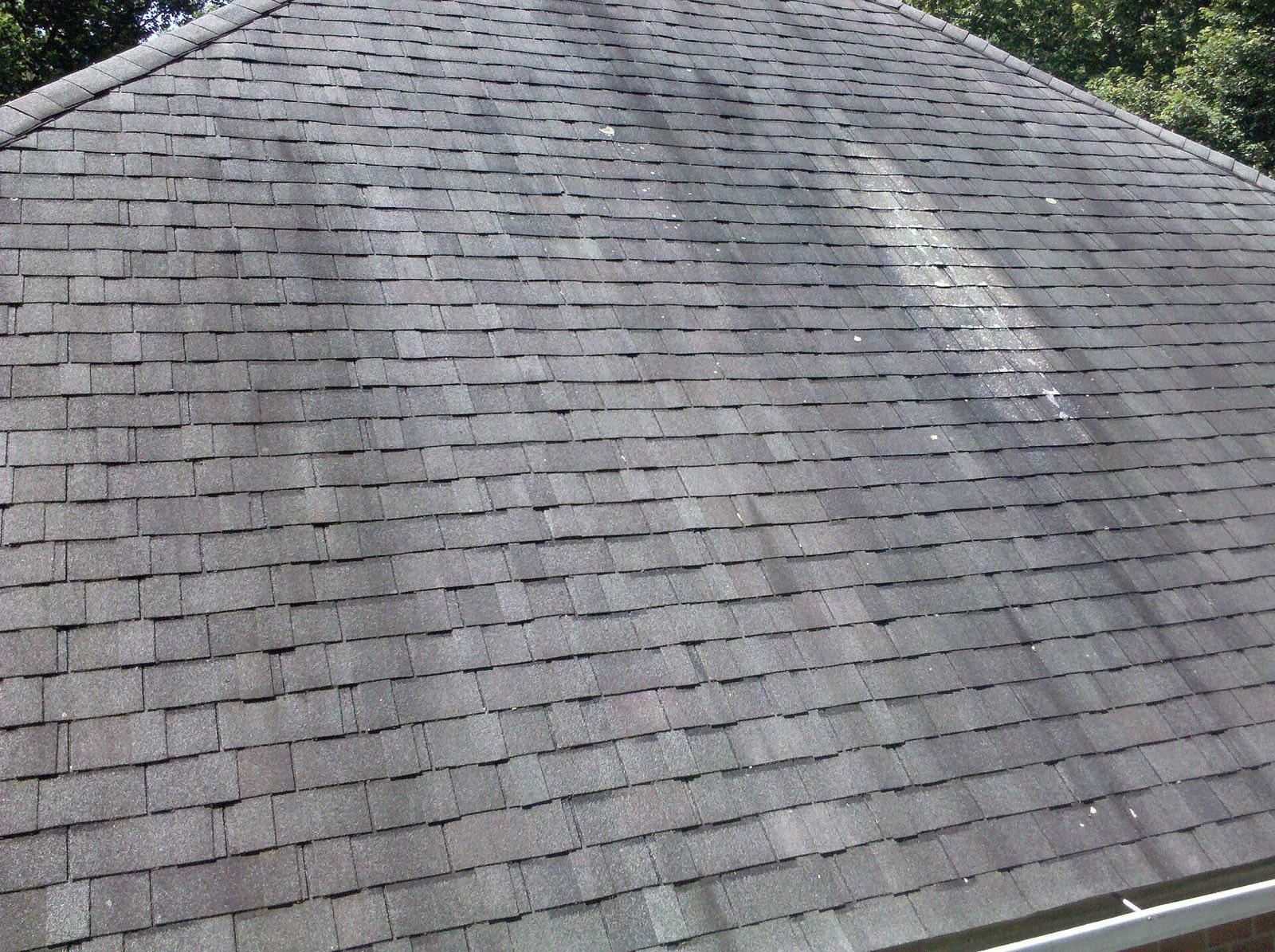
You back out of the driveway, glance up, and there they are: dark streaks running down your roof like something spilled. Most Southwest Florida homeowners assume it's dirt or just "an old roof." It's neither. Those streaks are alive - and knowing what they are tells you whether it's a cosmetic annoyance or an early warning.
The black streaks are algae (Gloeocapsa Magma)
The dark stains on asphalt roofs are a hardy blue-green algae called Gloeocapsa Magma - often described as a form of mold. It feeds on the limestone filler in shingles and spreads as dark streaks, usually running downward with the flow of rainwater.
It thrives in exactly the conditions Southwest Florida offers in abundance: heat, humidity, and frequent rain. That's why roofs in Cape Coral, Fort Myers, and Naples get streaked so much faster than roofs in drier climates.
Black, green, or white - what each color means
Not all roof growth is the same, and the color is a clue to how serious it is:
- Black streaks - Gloeocapsa Magma algae. The most common and the earliest stage. Mostly cosmetic at first, but it's the foothold everything else builds on.
- Green patches - a heavier algae or moss bloom. It holds moisture against the roof, which accelerates deterioration.
- White or grey crusty spots - lichen, the aggressive one. Lichen roots into the shingle or tile surface and physically breaks down the material, and it's the hardest to remove.
As a rule: black is the warning, green is the escalation, and white/grey means it's been working on your roof for a while.
When is it actually dangerous?
Early black streaking is mostly a curb-appeal problem. But left untreated, it doesn't stay cosmetic:
- Growth holds moisture against the roof, and constant dampness is what ages roofing materials.
- Algae and lichen break down shingles and tile over time, and lichen can decay holes into the surface.
- Trapped moisture can eventually contribute to wood rot in the structure beneath.
- A stained, growth-covered roof can lower home value and curb appeal - and it's a red flag to buyers and inspectors.
The danger isn't the streak you see today; it's what it turns into if you ignore it for a couple of Florida summers.
Will it come back if I just rinse it off?
Yes - fast - if it's not killed at the root. This is the trap with pressure washing or a quick DIY rinse: it blasts off the visible stain but leaves the organism alive, so the streaks return within weeks and the roof took damage for nothing.
The lasting fix is soft washing: low pressure plus a cleaning solution that kills the algae, mold, and lichen at the root so it doesn't race back. It's also the only method that's safe for your roof in the first place. (See Soft Wash vs Pressure Washing.)
What to do about it
If you're seeing black streaks now, you're at the ideal moment to treat them - early, before green blooms and lichen set in. A professional soft wash removes the current growth and resets the clock; from there, a regular cleaning cadence keeps it from coming back.
Get a free assessment and soft wash quote for your SWFL roof →
This article is part of our Complete Guide to Soft Wash Roof Cleaning in Southwest Florida.
Frequently Asked Questions
What causes black streaks on roofs? Black streaks are Gloeocapsa Magma, a blue-green algae (often called a mold) that feeds on the limestone filler in shingles. It thrives in warm, humid, rainy climates like Southwest Florida's, which is why streaks appear and spread quickly here.
Are roof algae stains dangerous? Early black streaks are mostly cosmetic, but left untreated the growth holds moisture against the roof and breaks down shingles and tile over time - and lichen can decay holes into the surface and contribute to wood rot.
Can black streaks be removed permanently? They can be removed and kept away with soft washing, which kills the algae at the root, followed by regular cleaning. Simply rinsing or pressure washing the stain off leaves the organism alive, so it returns within weeks.
Cover photo: Mcbooz, CC BY-SA 3.0, via Wikimedia Commons