Few pieces of mail land harder than an envelope from the association. The language is formal, the deadline feels close, and words like "violation," "hearing," and "fine" are doing a lot of work. Here is the thing experience teaches: in Southwest Florida, almost nobody who responds in the first week ends up fined. HOA exterior notices follow a predictable script, associations want compliance rather than conflict, and the entire process is navigable with a phone call, a scheduled date, and a set of photos. This guide walks through the script — what the notice means, what actually satisfies the association, and how to close the file for good.
Why SWFL associations send so many exterior notices
It is not pettiness — it is biology plus bylaws. Southwest Florida's heat, humidity, and 55 inches of annual rain grow Gloeocapsa magma, algae, and mildew on every outdoor surface, continuously. Roof streaks, green driveways, and shaded mildew walls appear here in months, not decades. At the same time, nearly every planned community in Lee and Collier County — from Gateway and Colonial Country Club to Sandoval and the gated neighborhoods off Burnt Store Road — carries governing documents that require exteriors to be kept free of staining and discoloration, because uniform curb appeal protects everyone's property values. Fast-growing grime plus appearance covenants equals a steady stream of letters. Yours is not personal; whole streets get them in the same month.
The anatomy of a violation notice
Florida homeowners' associations operate under Chapter 720 of the Florida Statutes and their own governing documents, and most follow the same escalation ladder:
- The courtesy notice. The first letter, usually giving 30 days to address the issue. It often arrives after a community inspection drive-through. This is the cheapest moment of the entire process: respond now and the matter rarely goes further.
- The second notice. Firmer language, a shorter window — commonly 14 to 30 days — and sometimes a reference to the fining process. Associations send these when they have heard nothing; silence, not grime, is what escalates files.
- The hearing or fine notice. Before most Florida HOAs can levy a fine, the matter goes to a committee hearing with notice to the owner. Fines for continuing violations can accrue daily up to statutory caps. Reaching this stage over a cleanable surface is almost always the result of two ignored letters.
The pattern to internalize: associations respond to evidence of action. A written reply stating that the work is scheduled, with a date and the contractor's name, stops the escalation clock at any rung of the ladder.
The three letters SWFL homeowners actually get
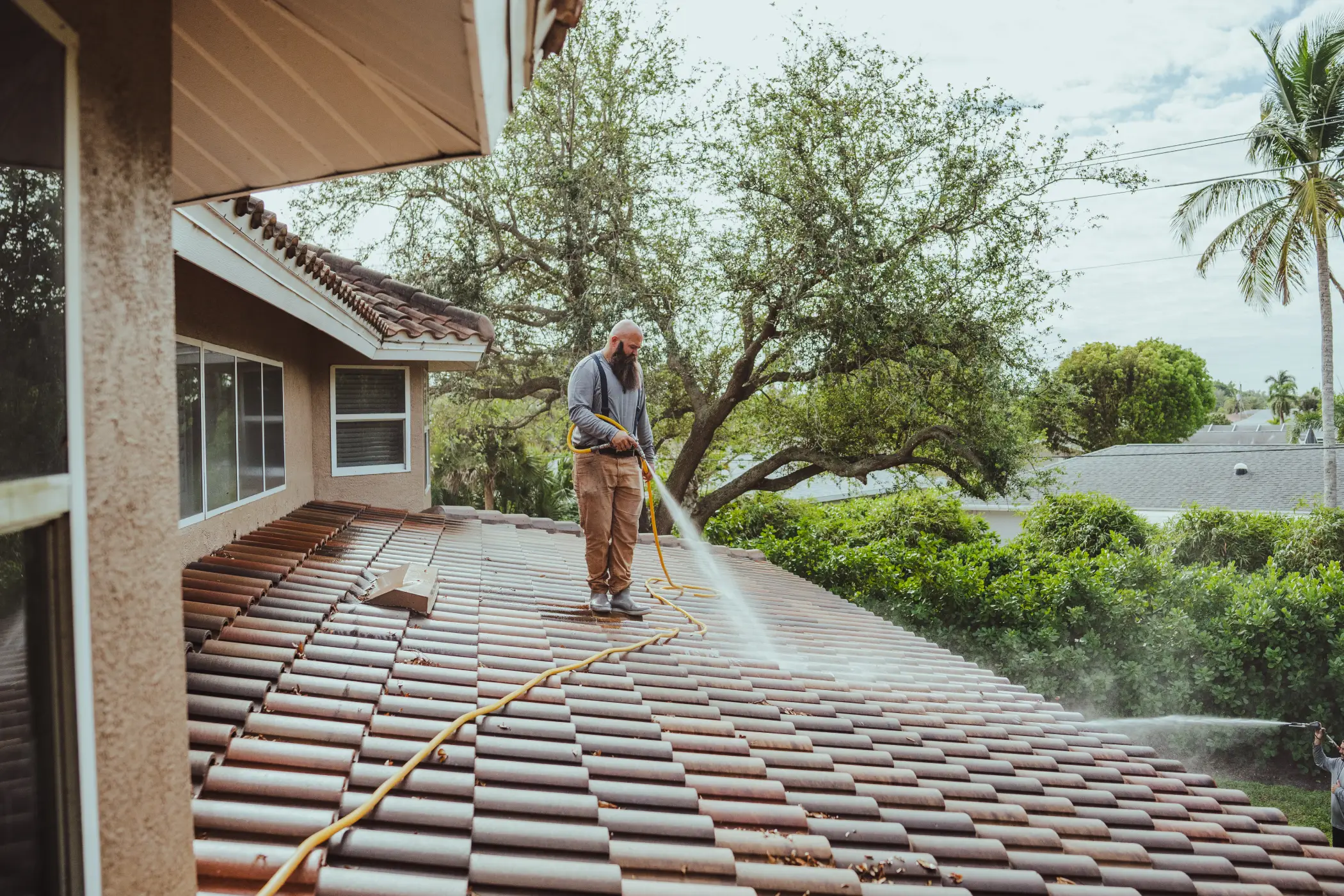
1. The roof letter. By far the most common. The citation reads "organic growth," "staining," or "discoloration" on the roof — the black streaks of Gloeocapsa magma feeding on tile and shingle. The fix is a soft wash roof cleaning: low-pressure, biodegradable, the method roofing manufacturers themselves specify. What satisfies the association is a roof visibly free of streaking in daylight photos. For the Fort Myers specifics — including how compliance deadlines are prioritized — see our Fort Myers roof cleaning page.
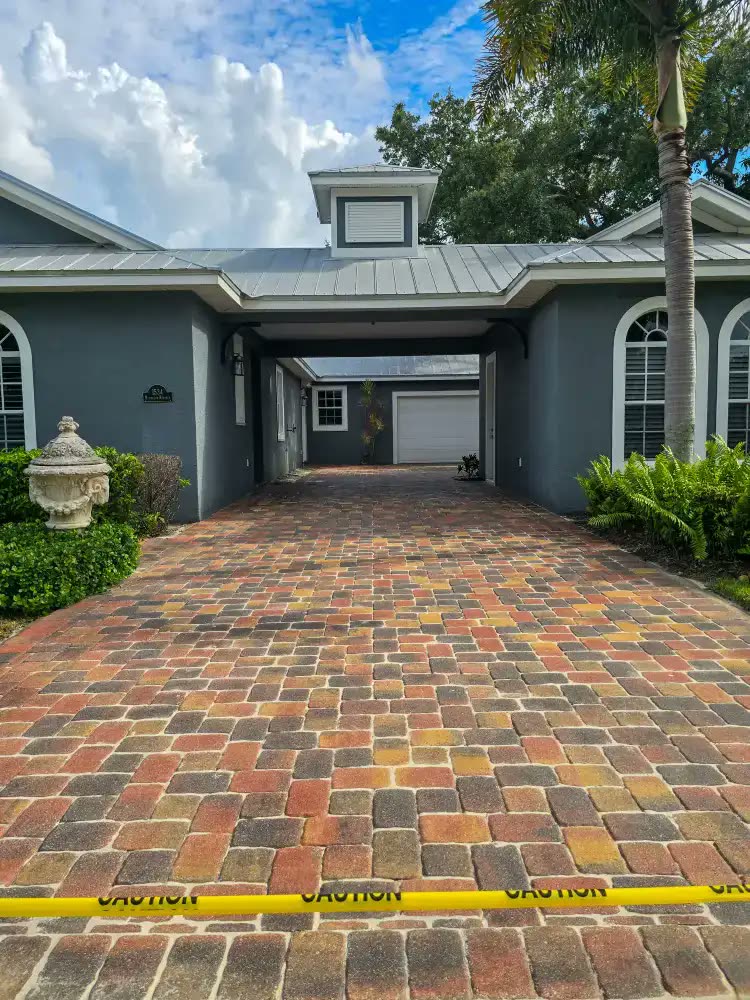
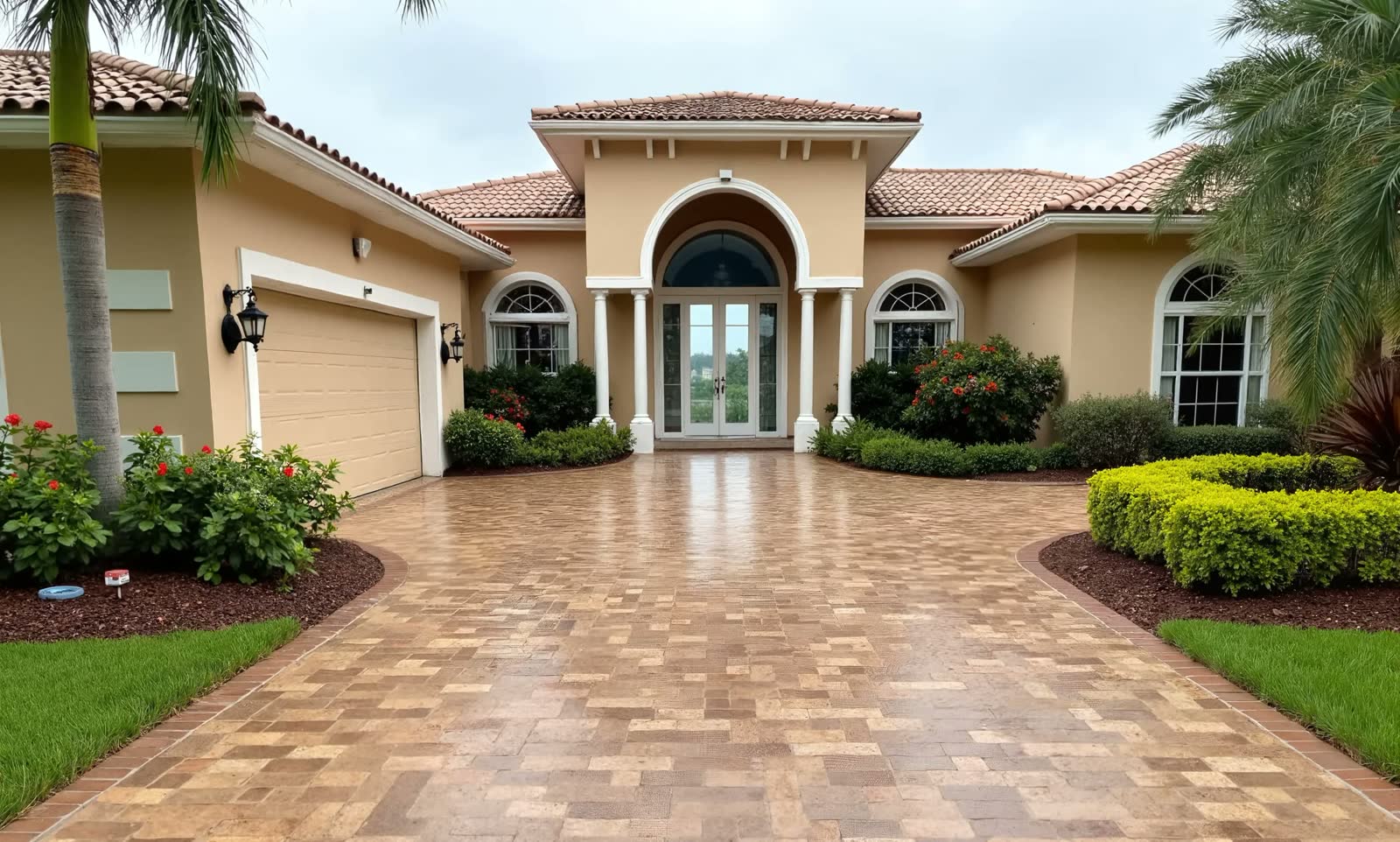
2. The driveway letter. "Stained driveway" covers tire marks, mildew shadowing, rust lines from irrigation, and the gray film pavers develop when sealer fails. Driveway cleaning clears the organic staining; rust needs its own treatment; and pavers that gray out quickly usually need re-sealing after the wash, or the letter returns next year.
3. The house letter. Mildew on the shaded wall, green film under the soffits, dirt shadowing above the stucco band. A low-pressure house wash resets the walls without blasting paint or stucco — and finishing the job sitewide beats spot-cleaning the cited wall, because the inspector who cited one elevation will drive past the others too.
How to respond — the four-step script
- Step 1: Reply in writing, immediately. Email the management company: you received the notice, the work is being scheduled, and a completion date follows shortly. This single email stops most escalation on its own.
- Step 2: Get the work scheduled and send the date. Follow up with the booked date and the contractor's name. If your deadline is inside two weeks, say so when you call us — compliance jobs get priority on our schedule, and being on the calendar is usually enough to pause the clock.
- Step 3: Keep the documentation. What closes an HOA file is not a receipt — it is dated before/after photographs, wide enough that the house is identifiable. Every compliance job we do includes that photo set and a written service record, because in this county the paperwork is the part that ends the process.
- Step 4: Send the proof and ask for written confirmation. Forward the photos to the management company, request that the file be closed, and keep the thread. Repeat notices happen — a documented history turns the next one into a two-minute email.
Know the boundaries
Two honest notes. First, this is practical guidance, not legal advice — your association's governing documents control the specifics, and for a dispute that has already reached fines or liens, a Florida community-association attorney is the right call. Second, verify before you spend: occasionally the cited "staining" is actually failed paint, rusted flashing, or damaged material that no cleaning will fix. A contractor who looks first and tells you which problem you have — rather than selling you a wash for a repair issue — saves you from paying twice.
Staying off the list entirely
The cheapest violation is the one that never gets written. The SWFL rhythm that keeps homes clear: a roof soft wash every 2 to 3 years, a house wash and driveway cleaning annually, and a walk around the property each spring before the rainy season — the same inspection the association's drive-through will do, done by you first. Homeowners who sync that calendar with their community's inspection season stop getting letters altogether; the association's inspector simply never finds anything to cite.