
The suitcases are barely unpacked, the AC is cycling, and the house that waited out a Florida summer alone is about to tell you how it went. Every November, thousands of Southwest Florida homes reopen after six months of empty — six months that happen to contain the entire rainy season, two or three decent storms, and the most aggressive biological growing conditions in the continental United States. Before the season's first guests arrive, the exterior deserves one honest walk-around. Here is the checklist, in the order that catches problems before they become projects.
1. Stand across the street and look at the roof
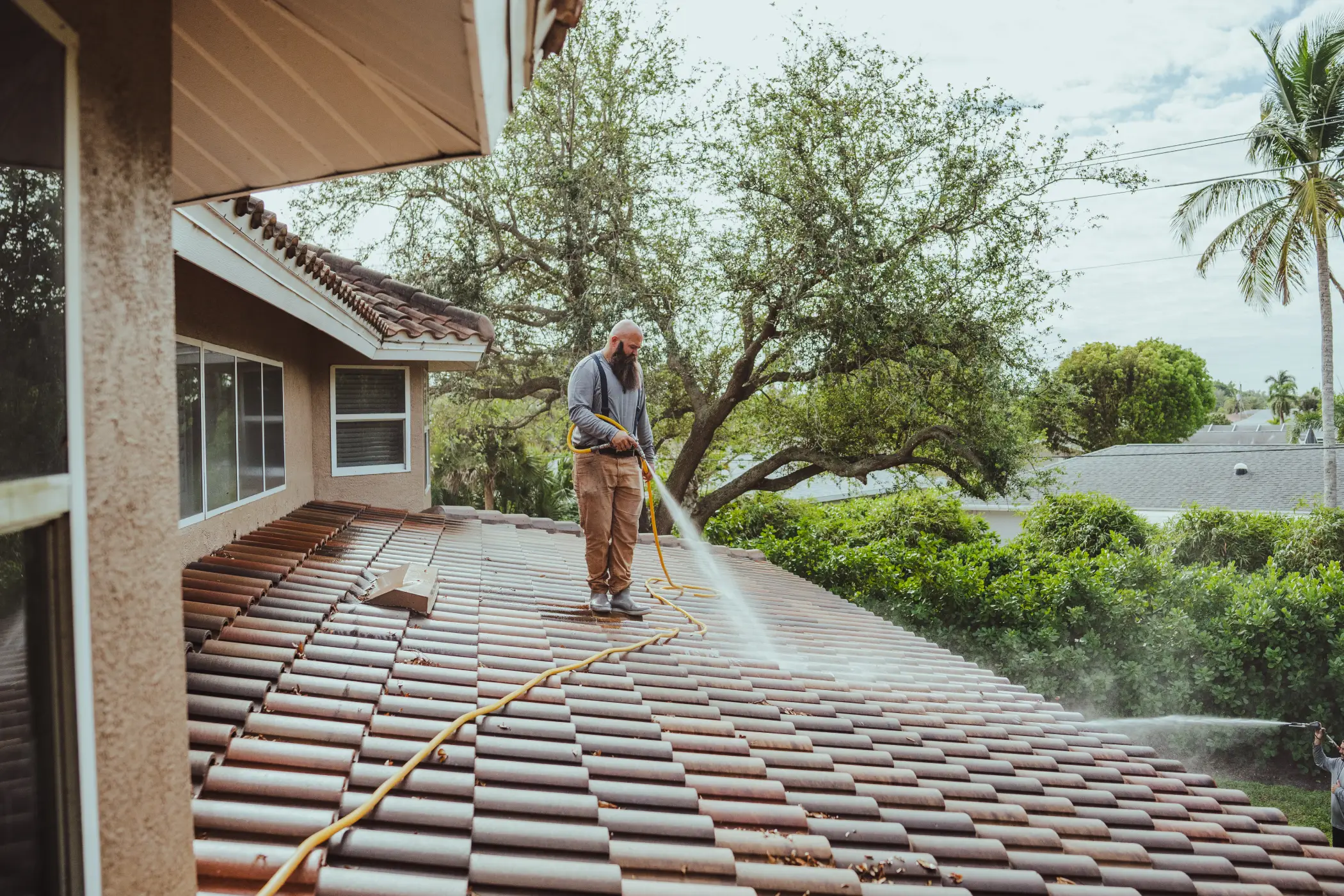
Start where the money is. Black streaks running down the tile or shingle — Gloeocapsa magma, the organism behind most of Southwest Florida's roof staining — grew all summer while nobody watched. Beyond the cosmetics, the growth holds moisture against the roofing material and invites lichen, which does real damage. If the streaks are visible from the street, the roof is due for a soft wash — and if your community sends appearance notices, it is due before the association's seasonal inspection drive-through finds it first.
2. Check the gutters — especially if nobody cleaned them in May
The rainy season just ended, which means whatever the summer dropped into the gutters is still there: compacted leaves, seed pods, roofing grit, the one palm frond lying across a run. Look for the tell-tale stains — dark streaks on the wall below the gutter line mean overflow was happening while you were away. Flush test the downspouts; if one backs up at the base with clean gutters above, the clog is in the buried line. Seasonal homeowners in Estero and the gated corridors have this down to a rhythm — a pre-arrival gutter service timed for late October means coming home to a system that already works.
3. Walk the lanai and pool deck barefoot — carefully
The screen enclosure kept the leaves out, not the algae. A summer of humidity under reduced airflow leaves the lanai floor and pool deck with a thin biological film that is nearly invisible and genuinely slippery — the classic early-season hazard for houseguests in bare feet. While you are out there, watch how the deck drains after the next rain: water pooling along the channel drains means they packed up with debris over the summer, and water pooling elsewhere may mean the deck itself has settled.
4. Read the walls
Mildew writes its diary on stucco. The north and east walls — the shaded ones — will show green or gray film first; look along the soffit line, behind shrubs, and anywhere irrigation overspray lands. A low-pressure house wash resets the walls in an afternoon and is the single most visible before/after on the property. It also happens to be the fix for the second most common HOA letter in the region.
5. Squint through the windows
Six months of salt air, storm spray, and irrigation mineral spotting leave a haze on glass that you stop noticing from inside — until the season's first sunset points it out. Window cleaning pairs naturally with the gutter visit (same ladders, same perimeter), which is why the two are usually booked together.
6. Look down: the driveway and walkways
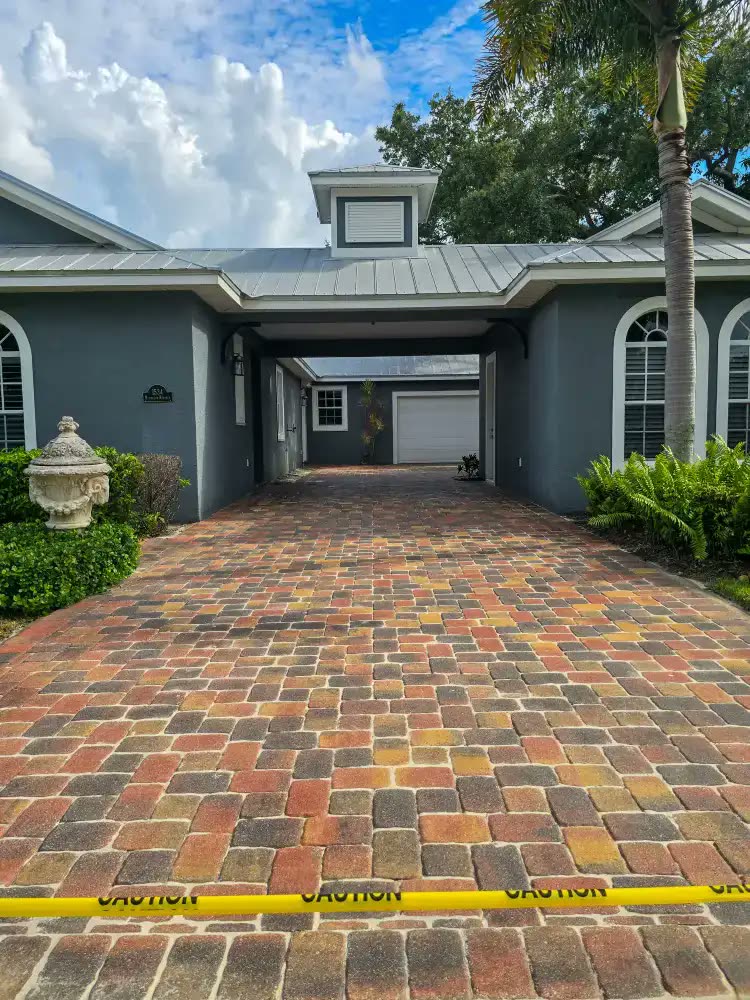
Summer grows a gray-green film on concrete and pavers that makes the whole approach look tired — and gets slick when the morning sprinklers hit it. A driveway cleaning brightens the entire first impression of the house; if the pavers lost their color and the joints look sandy and open, the sealer has likely run its course, and re-sealing after the wash protects them through the season.
The order of operations
If the house needs several of these, sequence matters: roof first (its runoff rinses onto everything below), then house walls, then windows and gutters, then the deck and driveway. One crew doing the full exterior top-to-bottom in a single visit costs less than four separate appointments and leaves no step undone — which is exactly how most of our seasonal clients book it: one reset in November, enjoy the house all season, one protective cleaning before heading north in spring.
The April counterpart
The checklist has a mirror image. The best thing a seasonal homeowner does for the house is not in November — it is in late April: gutters cleared before the summer rains, the roof and walls cleaned so growth starts from zero, deck drains flushed so five months of storms drain instead of flooding. The house you leave protected in April is the house that needs only a touch-up when you return. Either end of the calendar, the walk-around takes twenty minutes — and it is the cheapest inspection your Florida home will ever get.