The white spots on your windows are not dirt, and that is why window cleaner does nothing to them. They are minerals. Every time a sprinkler hits the glass, the water evaporates and leaves behind the calcium and magnesium that were dissolved in it. In Southwest Florida, where irrigation runs year-round and the water is hard, a window in the path of one sprinkler head can go from clear to cloudy in a single dry season. Whether the stains come off depends almost entirely on how long they have been there.
What hard water stains on windows actually are
Hard water carries dissolved minerals, mostly calcium and magnesium. On glass they dry into a chalky white deposit. Fresh, it sits on top of the surface. Left for months in the sun, it bonds to the glass, and given long enough it reacts with the glass itself and leaves it permanently rough — that is called etching.
Homes on a well often see a second color: an orange or brown tint from iron. And reclaimed irrigation water, used in many communities here, can spot glass faster than tap water does.
The three stages — and what is realistic at each
| Stage | What you see | What it takes |
|---|---|---|
| 1. Fresh spots | White dots or a light haze, a few weeks or months old. You can feel them with a fingernail. | White vinegar and water, or a normal professional cleaning. |
| 2. Bonded deposits | Heavy white crust or a cloudy band where the spray hits. Vinegar lightens it but does not clear it. | A mineral deposit remover and careful polishing. Usually comes clean. |
| 3. Etched glass | The glass feels smooth, but the spots are still there after everything has been tried. | The glass surface is damaged. Professional glass polishing can improve it; sometimes only replacement fixes it. |
The honest part: stage three does not clean off, and no product on a store shelf changes that. Knowing which stage you are at before you start saves a weekend of scrubbing — or saves you paying someone for a result that was never possible.
How to remove hard water stains from windows
Start with vinegar
Mix equal parts white vinegar and water in a spray bottle. Spray the glass, or soak a towel and press it against the pane, and leave it for five to ten minutes so the acid has time to dissolve the mineral deposits. Wipe, rinse well with plain water so no residue is left, and dry with a squeegee or a microfiber cloth. Fresh hard water spots come off on the first or second try. Lemon juice works the same way, and a paste of baking soda and water is a gentle polish for light buildup.
If vinegar is not enough
Bonded deposits need a stronger acid. Use a mineral deposit or hard water stain remover made for glass, apply it with a non-scratch pad, and follow the label exactly. Professional window cleaners often go one step further and polish the wet glass with super fine (#0000) steel wool. It works, but only that grade, only on wet, plain glass, and never on tint film or coated glass — test a corner first. Stain removers are acids: wear gloves, keep them off the window frames, the stucco, and any pavers or natural stone below, and rinse everything thoroughly when you are done.
What not to do
- Do not work on hot glass in direct sun. The cleaner dries before it works and leaves its own marks.
- Do not use scouring powder or green scrub pads. They scratch glass, and scratches are permanent.
- Be careful with razor blades. On tempered glass — most sliding doors and many newer windows — a blade can drag tiny particles across the surface and leave scratches.
- Never use abrasives on tinted film or coated glass. If you have impact windows or a factory coating, check the manufacturer's care instructions before using anything stronger than vinegar.
- Do not pressure wash windows. It will not remove minerals, and it can force water past the seals.
Fix the sprinkler, or the spots come back
Cleaning the glass without changing the irrigation buys you a few weeks. The lasting fix is usually five minutes with a screwdriver:
- Find the head that is hitting the glass. Run the zone and watch. It is usually one head, turned slightly or set to too wide an arc.
- Adjust the arc or the throw so the spray stops short of the house, or swap the nozzle for one with a shorter radius.
- Look at the walls too. The same head is spotting the stucco and, on well water, leaving rust stains on the wall and the walkway.
- Rinse after a windy day. A quick rinse with the hose before the sun bakes the drops on is the cheapest prevention there is.
Spotting is worst in the dry season, from November through May, when the irrigation runs most and there is no rain to rinse the glass. That is the stretch to keep an eye on the west and south windows. Our Florida exterior calendar shows what else lands on the house in each part of the year.
Quick answers
Does Windex remove hard water spots?
No. Windex and other glass cleaners are made for dirt, grease, and fingerprints. They leave the glass streak-free around the spots and the spots exactly where they were.
Does vinegar and Dawn remove hard water stains?
On fresh stains, yes. The vinegar does the dissolving; a little dish soap helps the mix cling to vertical glass instead of running off. It will not clear deposits that have bonded for a year or more.
Does CLR remove hard water stains from windows?
CLR is an acid cleaner made for calcium and lime, and it handles the bonded deposits that vinegar cannot. Follow the label, keep it off natural stone, painted, and coated surfaces, and rinse the glass and everything below it thoroughly.
Can hard water stains be permanent on glass?
Yes. Once the minerals have etched the glass surface, the mark is damage, not a deposit. Polishing can reduce it; beyond that, the fix is glass replacement.
Hard water spots on other surfaces
Glass shows it first, but the same minerals land on everything in the spray. Shower doors get the same white film from the inside. Outside, pool cage frames and screens turn chalky along the bottom, dark garage doors and front doors spot, and cars parked near a sprinkler head get the rings that will not wash off. The approach is the same on each: mild acid, short contact time, thorough rinse — and stop the water from landing there in the first place.
When to call a professional
Hiring a professional makes sense when vinegar has not worked and you would rather not use acid cleaners yourself, when the windows are on a second story, or when you want to know whether the glass is stained or etched before spending money on it. We check that first on every window cleaning job, and we tell you which panes will come clear and which will not.
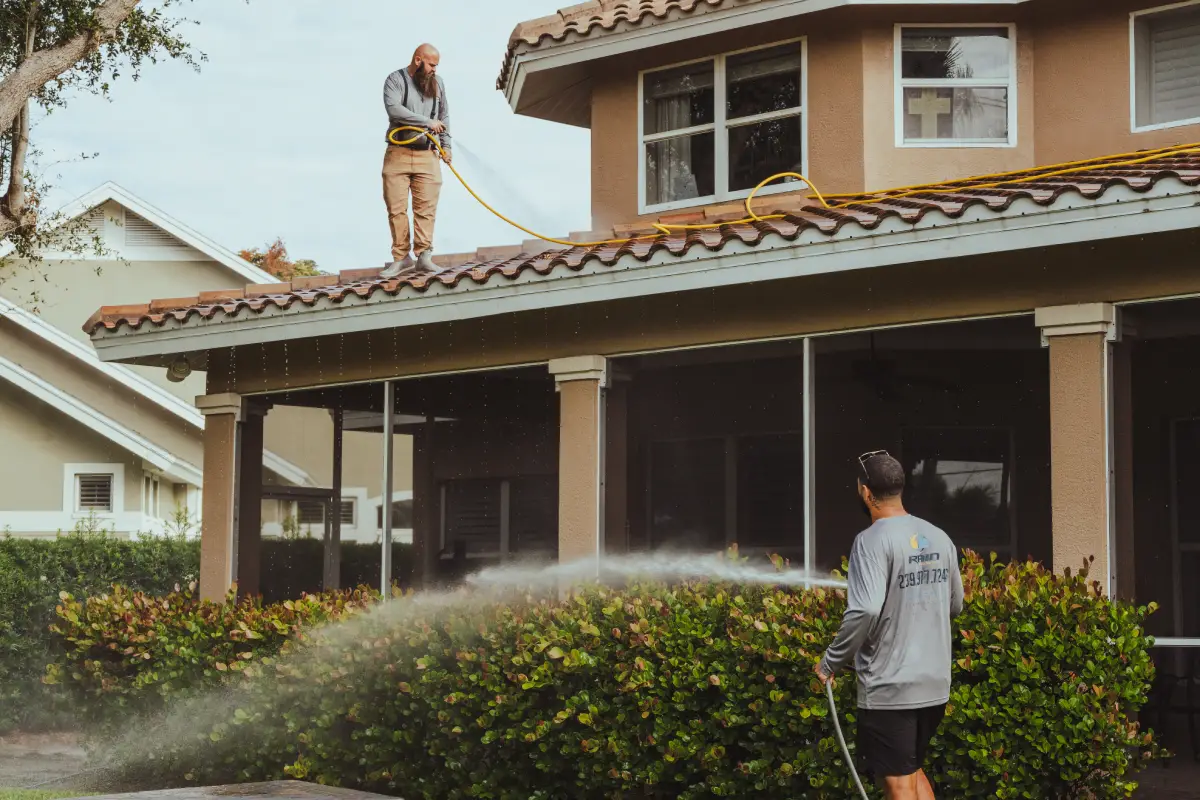
Rain Exterior Home Service treats hard water removal as part of professional window cleaning. We do window cleaning in Fort Myers and throughout Cape Coral, Naples, Estero, and Bonita Springs — windows inside and out, screens, and tracks, with a mineral treatment on the exterior glass where the sprinklers have been at work. See our window cleaning service for what is included.