The letter often arrives ahead of renewal. It says the insurer has reviewed your property, that there is a concern with the roof, and that something needs to happen by a certain date. For a lot of Florida homeowners the first reaction is confusion, because the roof does not leak and nobody has been up there. This guide explains why these letters are sent, how to tell a dirty roof from a damaged one, what Florida law says about roof age, and where a roof cleaning helps — and where it does not.
We clean roofs. We are not insurance agents or attorneys, and nothing here is legal or insurance advice. Your agent and the Florida Department of Financial Services are the right sources for questions about your policy.
Why insurers are sending roof letters
Insurers no longer wait for a claim to look at a roof. Many now screen properties with aerial imagery from planes, drones, and satellites, and follow up with a physical inspection if something looks wrong. State regulators describe the practice openly: the Connecticut Insurance Department, for example, lists what insurers consider, including missing or damaged shingles, unrepaired damage, excessive debris or moss buildup, and overhanging tree limbs (roof risk FAQ).
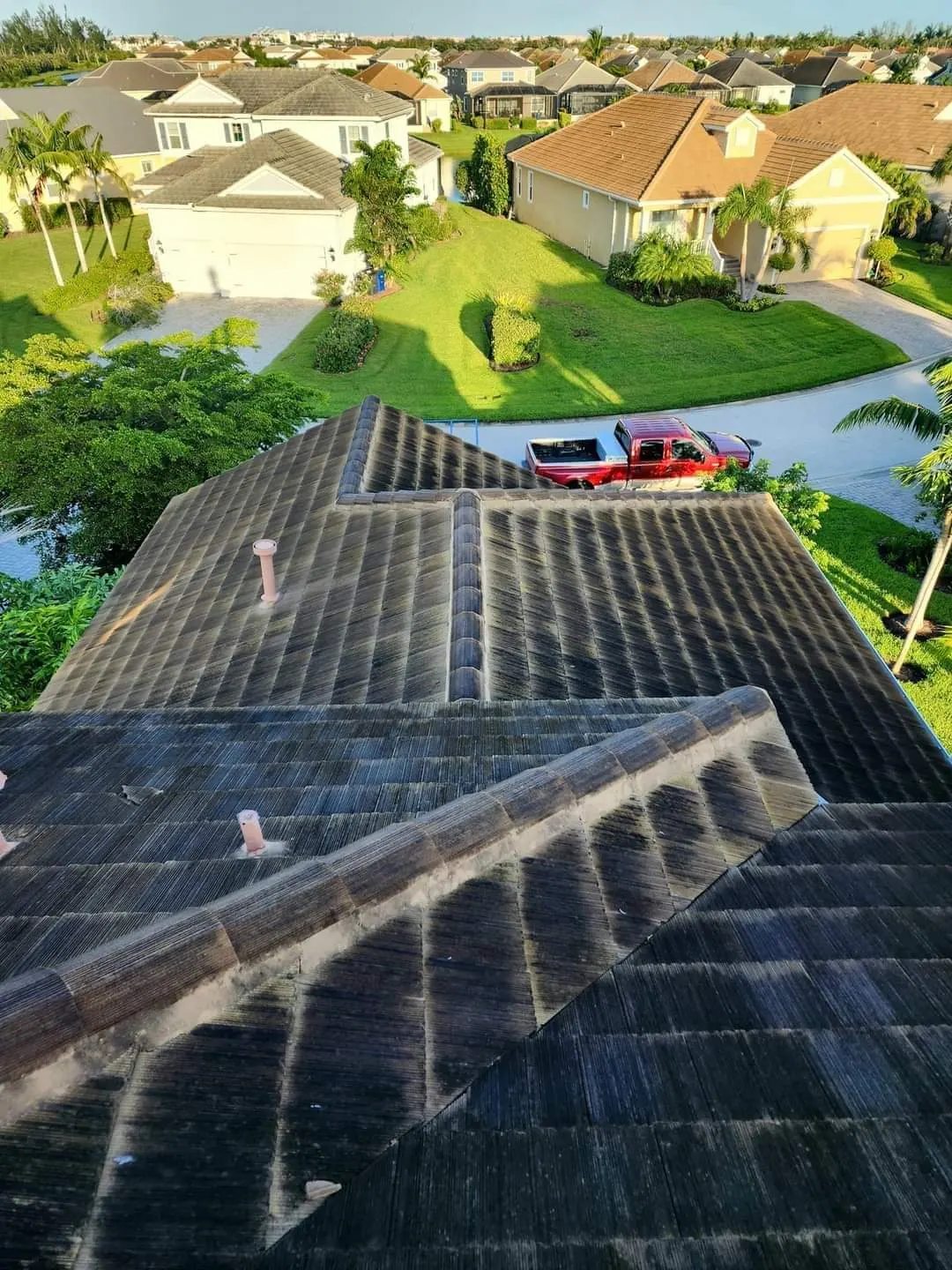
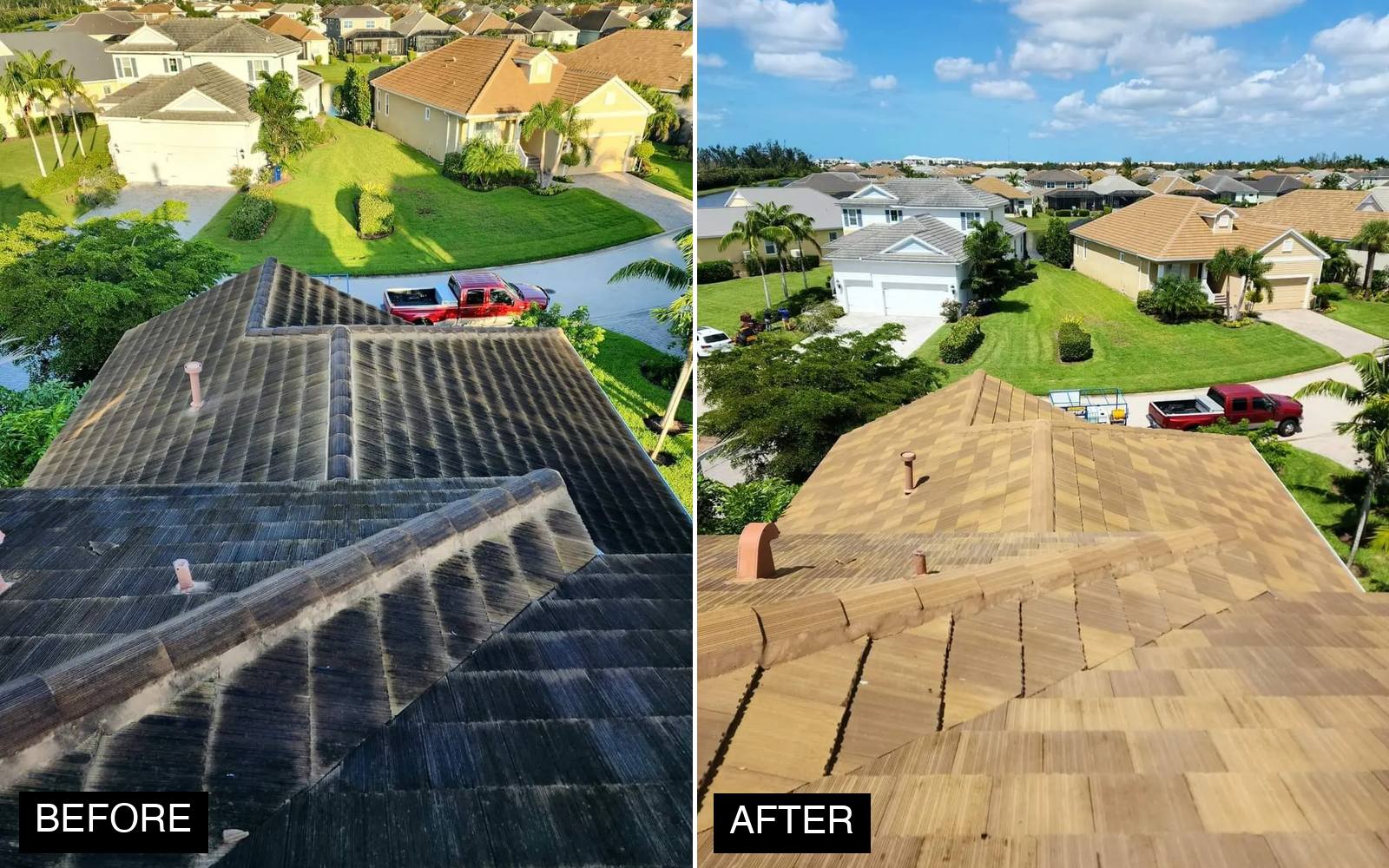
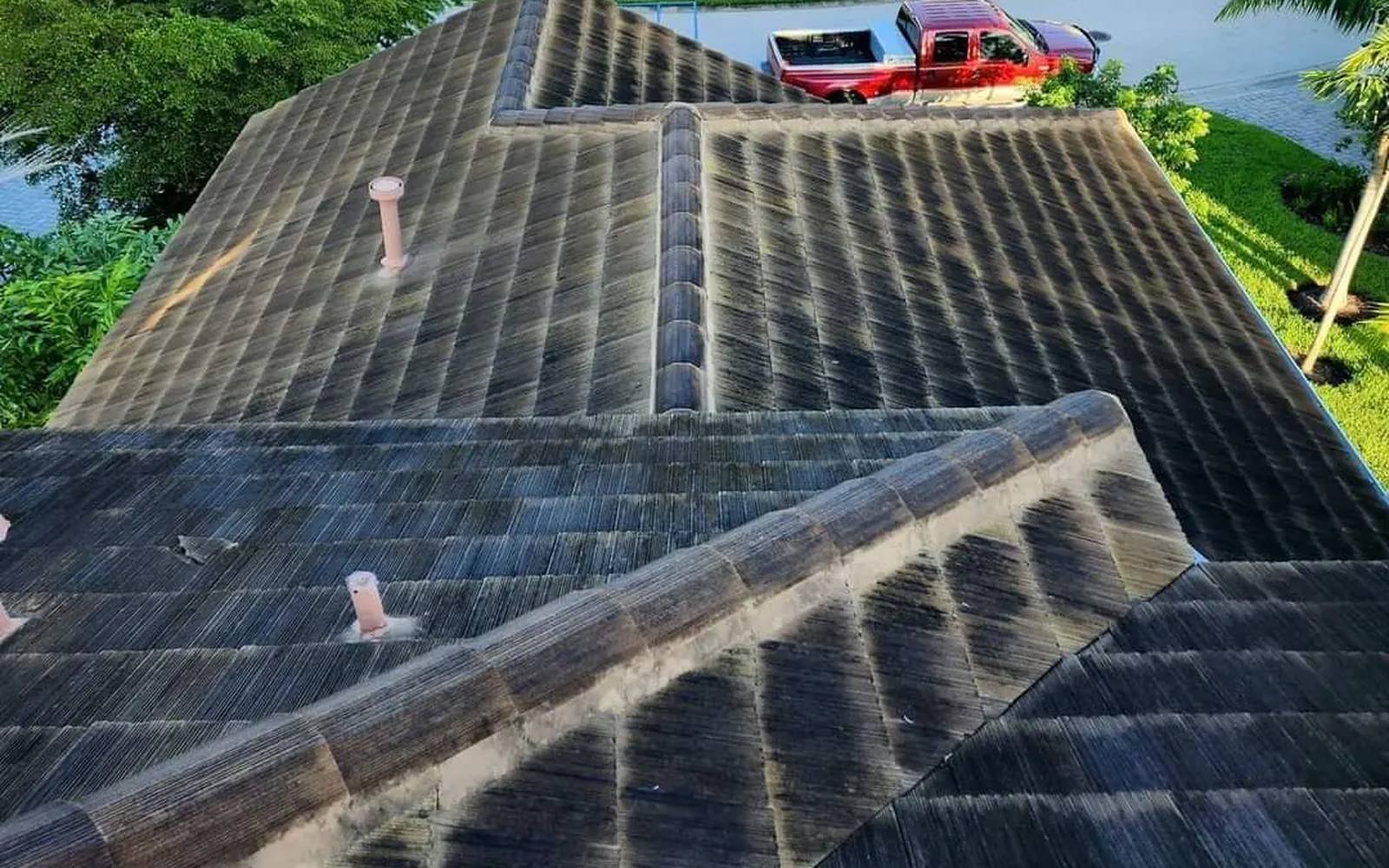
The weakness of a photo from above is that it cannot tell wear from growth. The black streaks on Florida roofs are algae, and from the air a roof covered in algae looks dark, uneven, and old. News reports from several states describe homeowners who received non-renewal notices citing mold, moss, or algae, and some who showed with an independent inspection that the roof underneath was sound.
First: read what the letter actually says
The reason matters more than anything else, because each one has a different fix.
| What the letter cites | What it means | What usually resolves it |
|---|---|---|
| Roof age | The roof has passed the age the insurer is comfortable with | An inspection showing remaining useful life — see the law below |
| Damage or deterioration | Missing, cracked, or slipped tiles or shingles; exposed underlayment; signs of leaks | A roofer. Cleaning does not fix damage. |
| Staining, discoloration, algae, moss, or debris | The roof looks neglected, or the photo is ambiguous | A proper cleaning, with dated photos sent to the insurer |
| Overhanging tree limbs | Branches over the roof are a storm and debris risk | Trimming, with photos |
If the letter is vague, call your agent and ask for the specific reason and for the photo or inspection report it is based on. You need to know exactly what you are being asked to fix before you spend money on it.
What Florida law says about roof age
Florida Statute 627.7011 sets limits on how insurers can use the age of a roof (full text). In summary:
- An insurer may not refuse to issue or renew a homeowner's policy solely because of the roof's age if the roof is less than 15 years old.
- If the roof is 15 years or older, the insurer must allow you to have it inspected by an authorized inspector, at your expense, before requiring that it be replaced.
- If that inspection shows the roof has five or more years of useful life left, the insurer may not refuse coverage solely because of its age.
- The statute defines who counts as an authorized inspector — a licensed home inspector, a licensed contractor, or a professional engineer, among others.
Two things to keep in mind. These protections are about age; they do not stop an insurer from acting on a roof's actual condition. And each insurer has its own underwriting rules on top of the statute. Citizens Property Insurance, for instance, publishes its own roof and inspection requirements on its inspections page. Check the current rules for your insurer rather than relying on what a neighbor was told.
What a four-point inspection looks at on the roof
For older homes, Florida insurers commonly ask for a 4-point inspection covering the roof, electrical, plumbing, and air conditioning. (It is a different thing from a wind mitigation inspection, which records how the roof is built — roof shape, roof deck attachment, and so on — and can lower your premium. Neither one is the same as a roof certification, which is a roofer's or inspector's statement of the roof's remaining life.) On the roof, the inspector records the covering material, its age, and the remaining useful life, and notes visible damage — the standard form lists items such as cracking, cupping or curling, excessive granule loss, exposed asphalt, and exposed felt, along with any signs of leaks.
Algae is not on that list. But two things about it matter on inspection day. A roof black with growth is harder to assess, and an inspector who cannot see the surface clearly has less reason to be generous about remaining life. And the wrong kind of cleaning creates a real deficiency: pressure washing strips granules from shingles and cracks tile, and granule loss is exactly what the form asks about. A roof should never be pressure washed before an inspection, or at any other time.
Where a roof cleaning helps — and where it does not
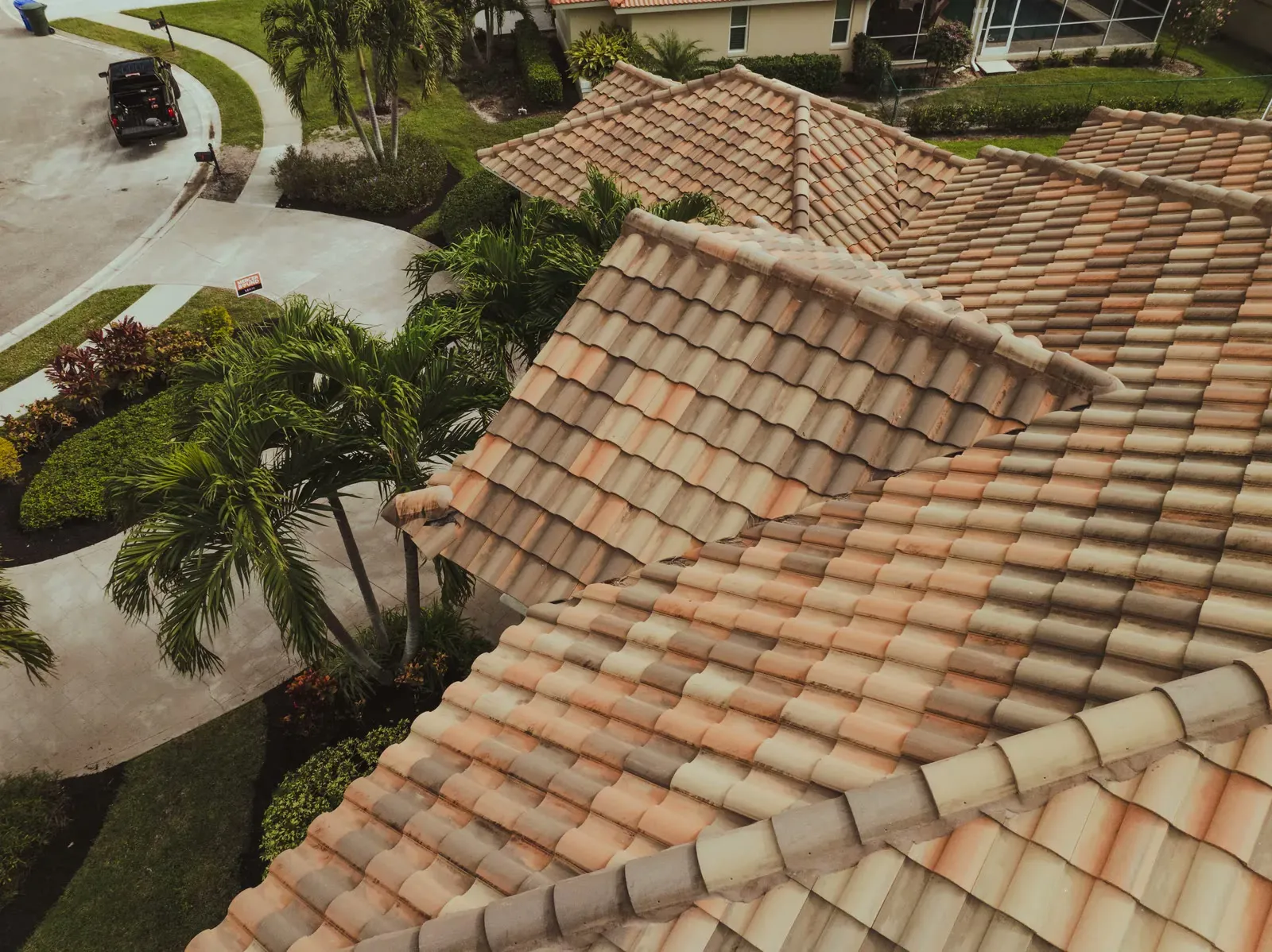
It helps when the issue is appearance. If the letter cites staining, discoloration, algae, moss, or debris, a soft wash roof cleaning removes the cause. The growth is killed with a low-pressure treatment and rinsed away, the roof returns to its real color, and the next photo — from the air or from a ladder — shows the actual condition of the tile or shingle.
It helps before an inspection you are paying for. If you are having the roof inspected to document its remaining life, a clean roof lets the inspector see what they are certifying.
It does not help with age or damage. Cleaning does not make a 25-year-old roof younger, replace a cracked tile, or stop a leak. If that is what the letter is about, a cleaning is money spent on the wrong problem, and we will tell you so. Our guide to roof cleaning versus roof restoration covers how to tell which one a roof needs.
What to do, in order
- Note the deadline in the letter and work backward from it.
- Call your agent. Ask for the exact reason, the evidence, and what documentation will be accepted as proof the issue is resolved.
- Match the fix to the reason: cleaning for staining and debris, a tree service for limbs, a licensed roofer for damage, an authorized inspector for age.
- Document everything. Dated before-and-after photos and a written receipt are what the underwriter needs to see. We provide both with every roof cleaning.
- Send it to the agent in writing and ask for confirmation that it was received and added to your file.
- If you believe the letter is wrong, get an independent inspection and contact the Florida Department of Financial Services, Division of Consumer Services, which helps policyholders with insurance problems.
Common questions about roof inspections and insurance
Is a 20-year-old roof insurable in Florida?
It can be. Under the statute above, a homeowners insurance carrier cannot refuse a roof of that age solely because of its age if an authorized inspection shows at least 5 years of remaining useful life. Tile roofs generally last far longer than a shingle roof, and carriers treat the two roof types differently. Whether a specific carrier will write the policy still depends on its own rules and the roof's condition.
Will my insurer pay for a roof cleaning?
No. Cleaning is maintenance, and maintenance is the owner's responsibility. An insurance claim is for sudden damage — storm damage, for example — not for algae.
Does a clean roof lower my insurance premium?
Not directly. What it can do is keep a sound roof from being flagged, and give you clean, dated photos as proof of roof condition if a question ever comes up.
Should I get the roof cleaned or inspected first?
Cleaned first, if the roof is visibly stained. A roofing contractor or home inspector can only report on what they can see, and missing shingles, cracked tile, and worn spots are all easier to find — or to rule out — on a clean roof.
The cheaper approach: do not let it get to a letter
A roof in Southwest Florida grows visible algae within a few years of being cleaned, and most need a soft wash every two to three years. Keeping to that schedule means the roof never looks neglected from above, the gutters are checked at the same time, and small problems — a slipped tile, a branch rubbing the ridge — are spotted while they are still small. It is also what many HOA exterior standards expect anyway.
Rain Exterior Home Service soft washes shingle, metal, and tile roofs across Fort Myers, Cape Coral, Naples, Estero, and Bonita Springs. If you have a letter in hand, tell us the reason it gives and send a photo of the roof, and we will tell you honestly whether a cleaning is likely to solve it.